CORUM's 2026 Beauty Trend Report combines expert insights, market research, and consumer discussions, offering a comprehensive outlook on the beauty and personal care market.
This year, CORUM’s annual beauty trend report highlights the global impact of K-Beauty on the beauty industry.
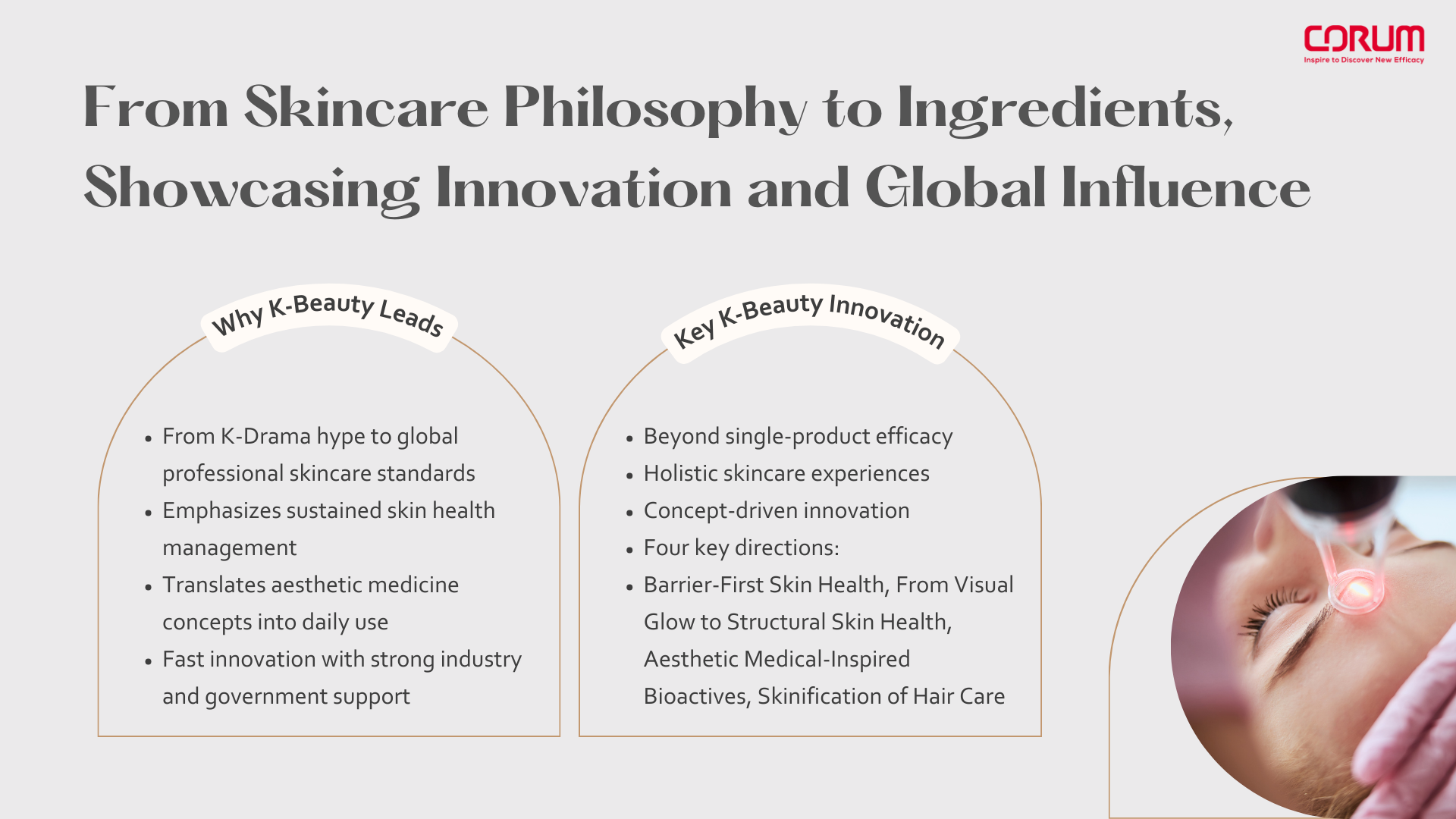
Therefore, when examining the innovative landscape of K-Beauty, the focus is no longer limited to individual product efficacy. Instead, it has expanded toward holistic skincare experiences and concept-driven innovation. These developments can be summarized into four key directions: Barrier-First Skin Health, From Visual Glow to Structural Skin Health, Aesthetic Medical-Inspired Bioactives and Skinification of Hair Care.
Theme 1 |Barrier-First Skin Health
In recent years, Barrier-First skincare has emerged as a core philosophy. With growing awareness of sensitivity, redness, dryness, and irritation, skincare is no longer about using higher doses of actives, but about reinforcing the skin barrier to improve resilience and long-term skin tolerance.
A healthy skin barrier relies on an intact stratum corneum structure, which is essential not only for preventing trans epidermal water loss (TEWL) but also for reducing the impact of external aggressors on the skin. In response to the Barrier-First Skin Health approach, CORUM proposes two complementary barrier repair strategies: endogenous barrier support and exogenous lipid reinforcement.
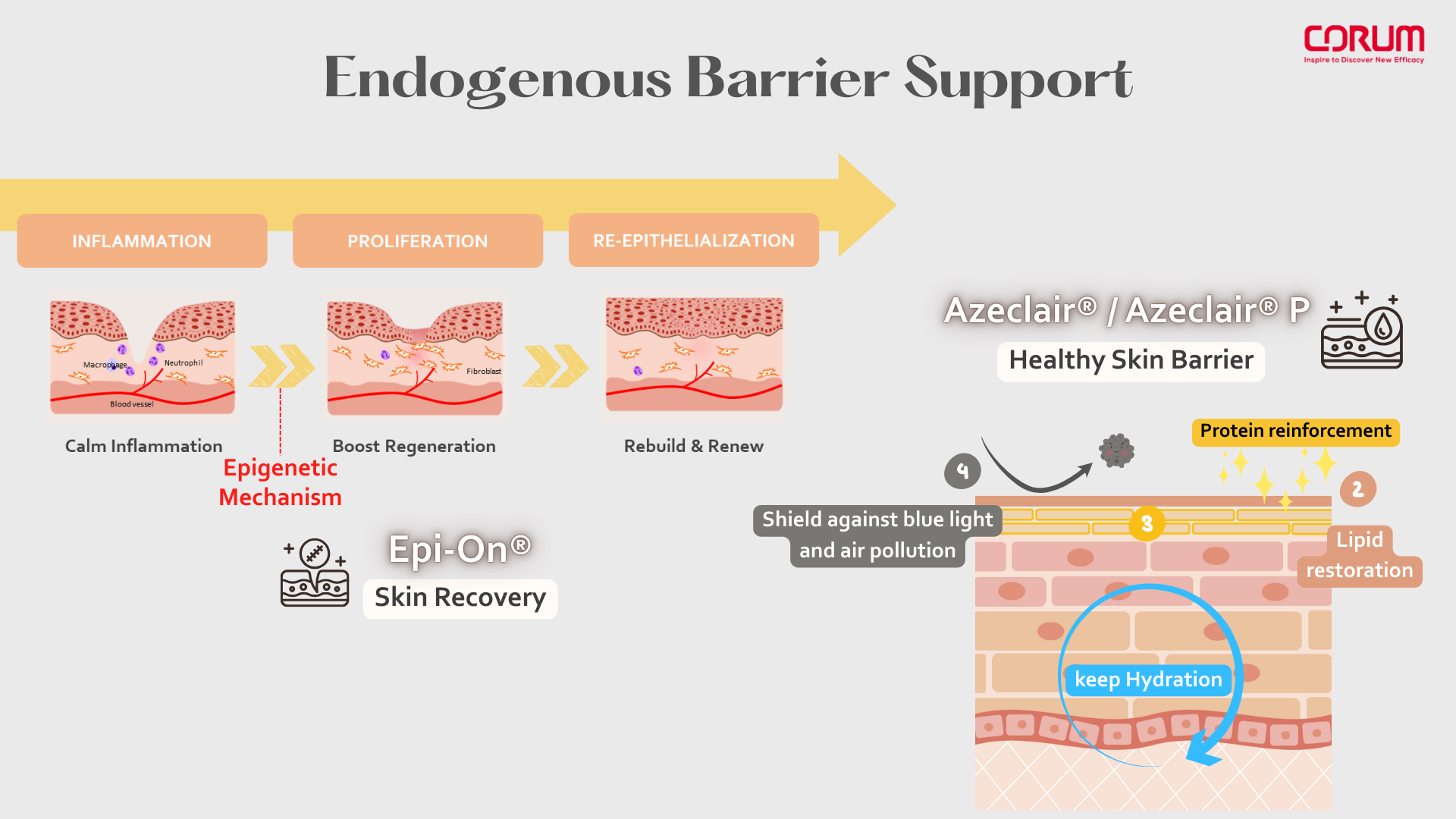
A. Endogenous Barrier Support
To enhance the skin’s natural self-repair mechanisms, Epi-On® activates epigenetic regulation pathways to support skin recovery, strengthen barrier function, and promote the repair of weakened or compromised epidermal layers.
Meanwhile, Azeclair® / Azeclair® P not only provide sebum-regulating and anti-inflammatory benefits, but also stimulate the production of natural moisturizing factors (NMF) and filaggrin in the stratum corneum. This further increases levels of hyaluronic acid and glycosaminoglycans, while reinforcing intercellular lipids and corneocyte envelope proteins, helping to establish a healthier and more stable barrier hydration cycle.
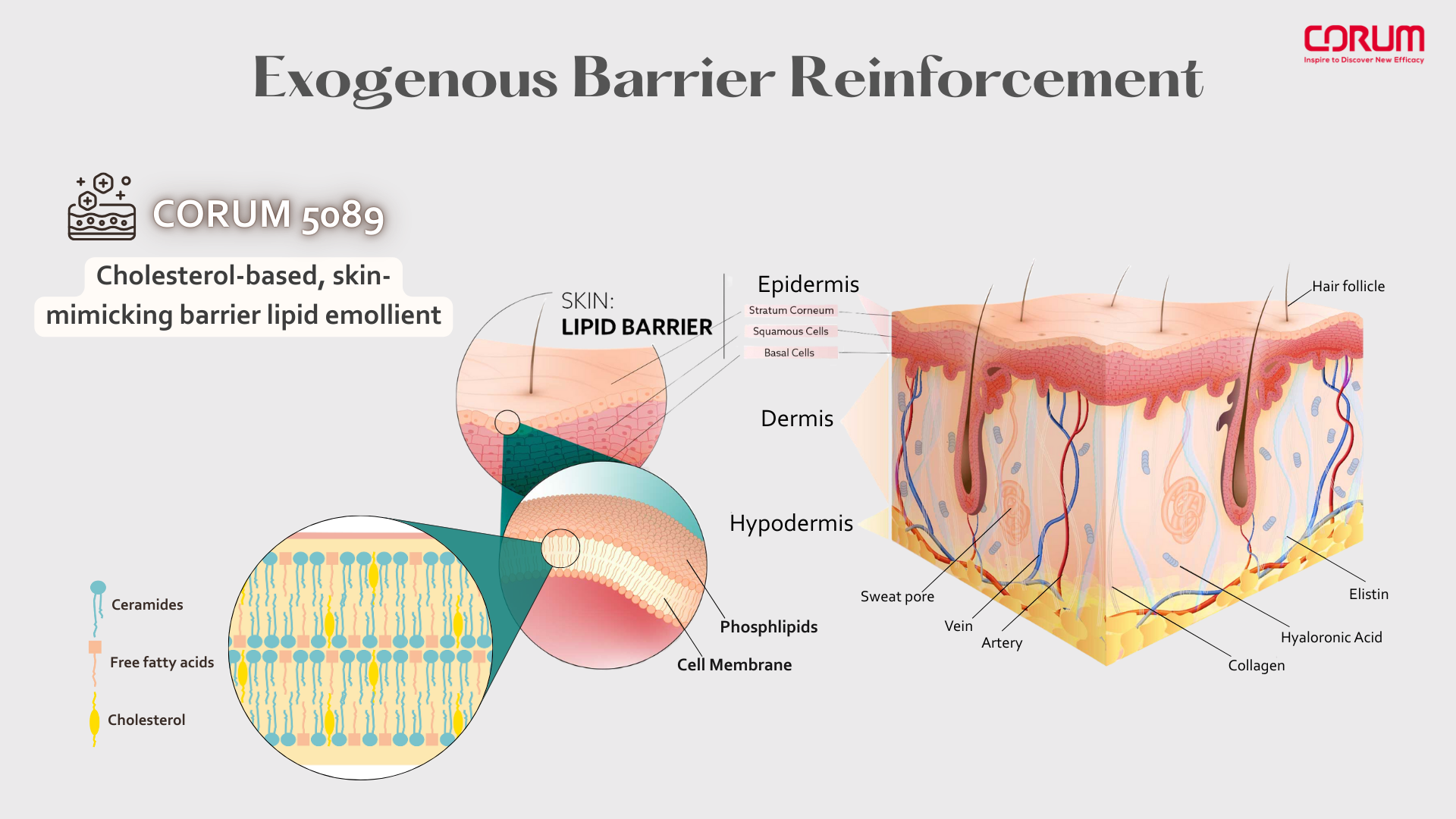
B. Exogenous Barrier Reinforcement
In addition to supporting endogenous repair, supplementing the skin with highly compatible external lipids plays a crucial role in barrier restoration. CORUM 5089, a cholesterol-based, skin-mimicking barrier lipid emollient, features a lipid composition like that of natural human skin. It helps improve skin hydration, reduce post-cleansing tightness, and provide immediate reinforcement of the skin’s protective barrier.
Theme 2 |From Visual Glow to Structural Skin Health
The term “Glass Skin” originates from the Korean word 유리피부, referring to skin that appears crystal-clear, smooth, and flawless. Recent trends in K-Beauty emphasize naturally radiant skin supported by healthy skin structure. True Glass Skin is not achieved through superficial brightening; it stems from a healthy stratum corneum, stable intercellular lipids, and a well-functioning hydration cycle, resulting in smooth, elastic, and evenly glowing skin. Maintaining this radiance also requires protection against cumulative light-induced damage, as UV and blue light can increase oxidative stress, activate collagen-degrading enzymes (MMPs), and affect pigmentation. Therefore, daily sun protection that goes beyond UV blocking is essential to maintain skin structure and long-term brightness.
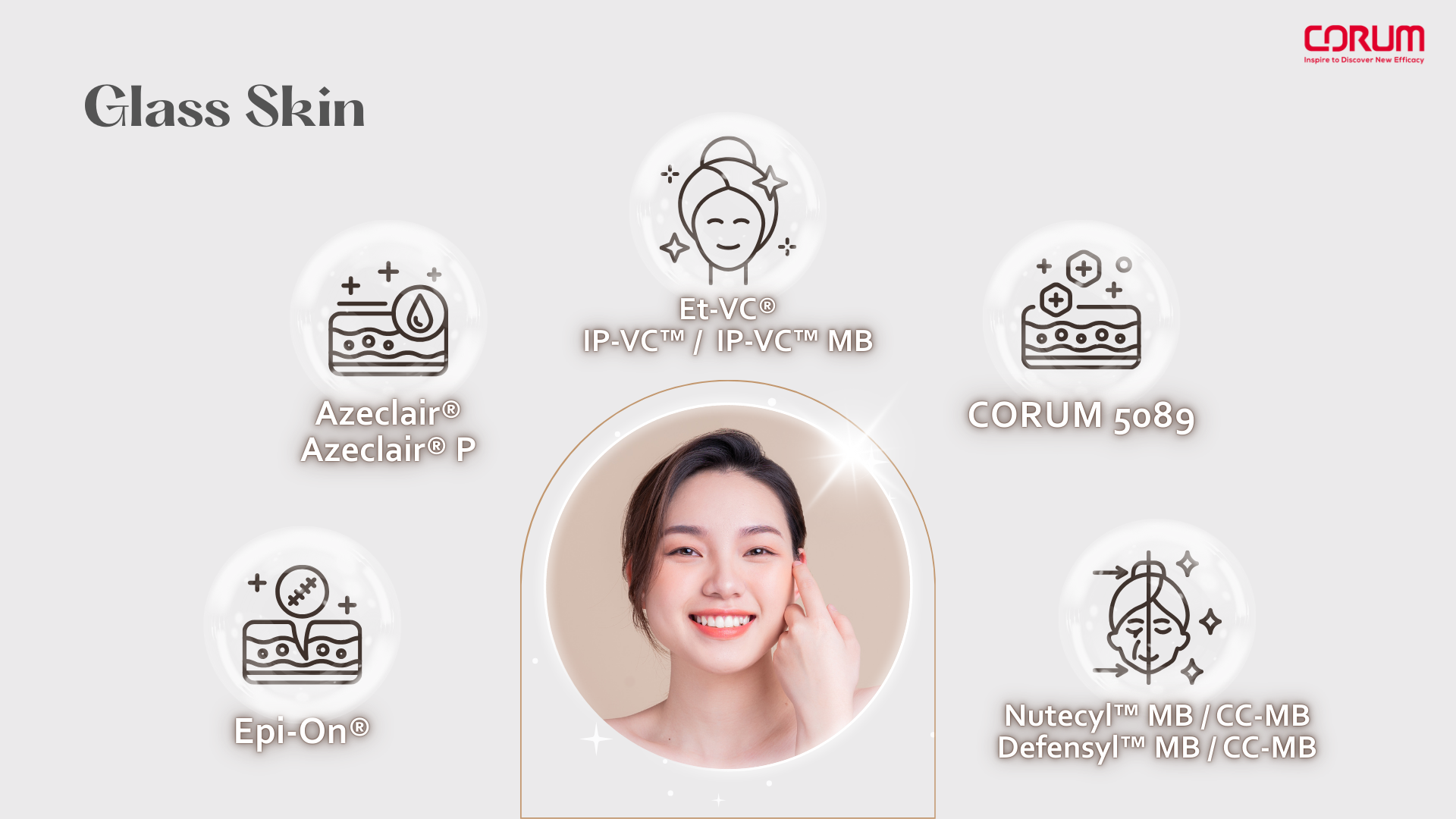
To achieve sustainable Glass Skin, formulation design must support barrier repair, even skin tone, antioxidant defense, and daily sun protection. Key ingredients include:
Theme 3 |Aesthetic Medical-Inspired Bioactives
In recent years, bioactive ingredients originally used in medical aesthetic treatments have become a key focus within K-Beauty. Concepts such as skin repair, regeneration, and cellular signaling regulation, which previouly limited to in-clinic procedures, are now being translated into safe, daily-used cosmetic formulations.
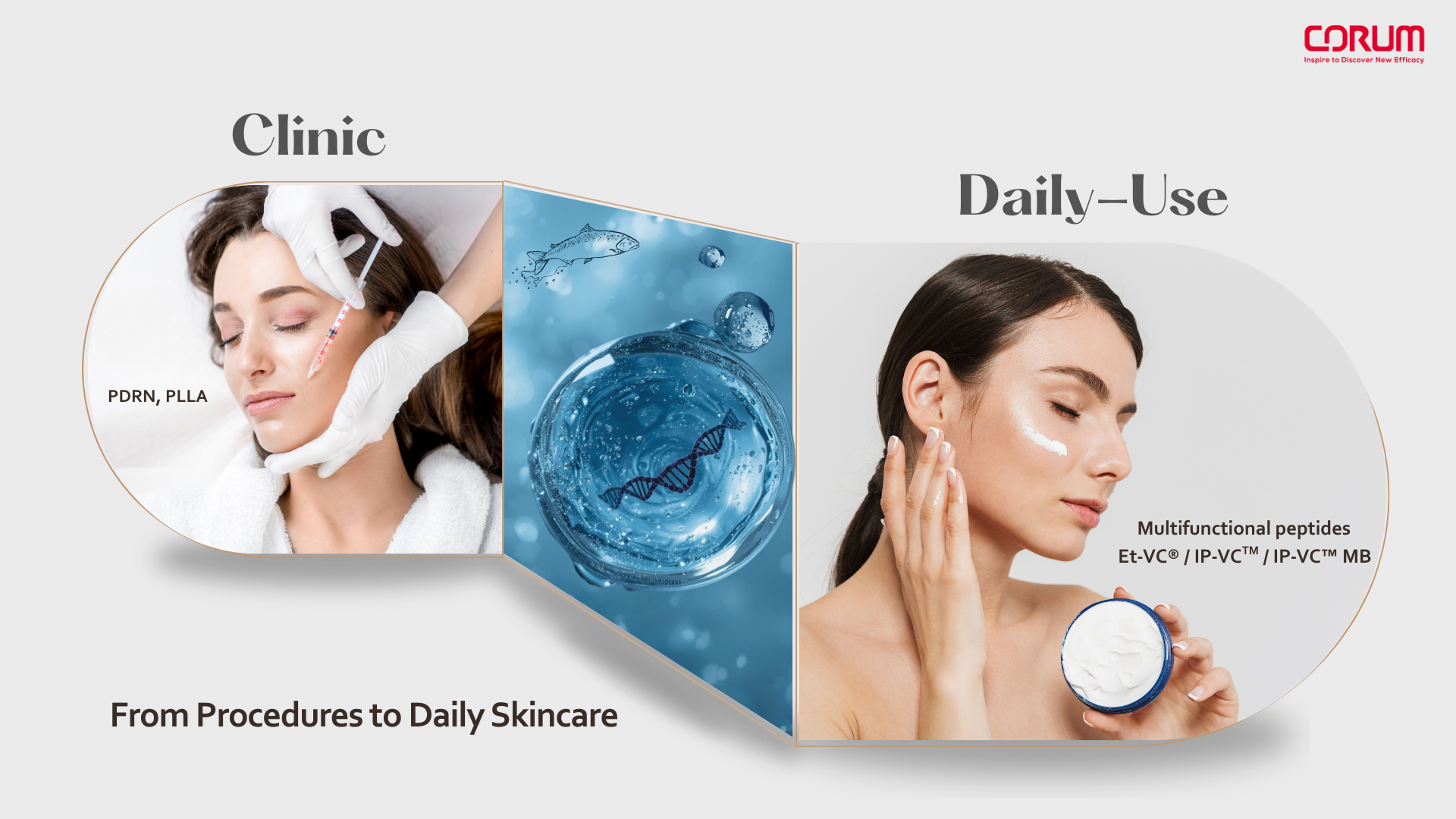
Many brands are leveraging bioactives such as PDRN, exosomes, and peptides to mimic the regenerative and functional restoration mechanisms of medical aesthetic treatments, while emphasizing safety, cosmetic compliance, and long-term skin tolerance. (For details on the efficacy of PDRN, please refer to our article: Next-Generation Skin Repair Module: From PDRN × Exosome to Peptides × Epi-On® × Azeclair® P Precision Regeneration and Homeostasis Strategy.)
Meanwhile, Poly-L-lactic acid (PLLA, commonly known as Sculptra) is widely used in aesthetic medicine as an injectable to stimulate collagen, firm and plump skin, and smooth sunken areas. In K-Beauty trend discussions, it is occasionally cited conceptually to highlight collagen-boosting ideas, rather than as a topical active.
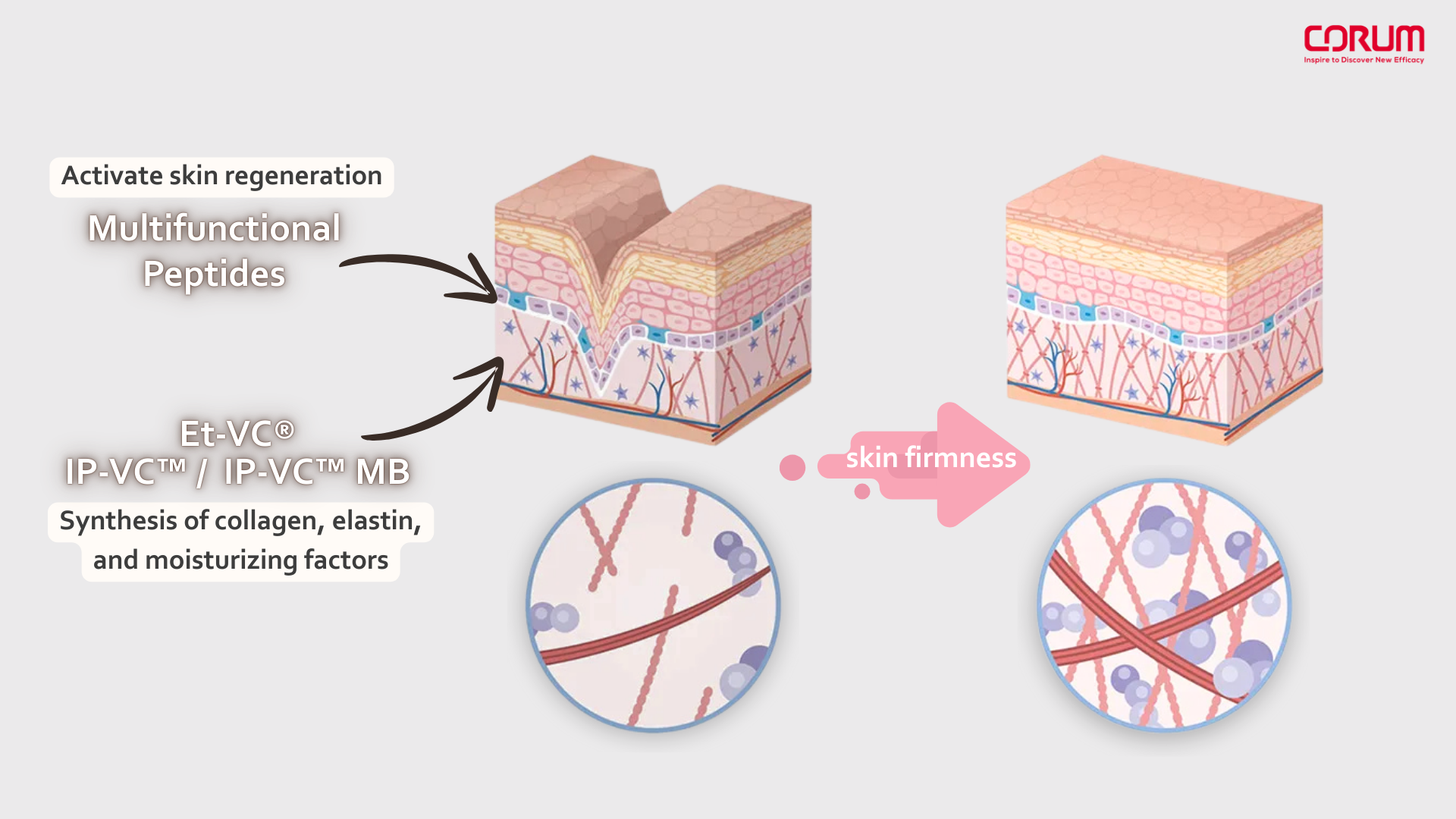
In CORUM’s ingredient portfolio, skincare formulation strategies focus on mechanisms that can be effectively utilized by the skin. Multifunctional peptides can directly activate skin regeneration–related signaling pathways, supporting skin firming and texture refinement. Meanwhile, Et-VC® / IP-VC™, IP-VC™ MB, a stabilized vitamin C derivative, improves uneven skin tone and further supports extracellular matrix (ECM) integrity by promoting collagen synthesis and moisturizing factor production.
Theme 4 |Skinification of Hair Care
As K-Beauty extends the concept of Skin Health to full-body care, the scalp is increasingly seen as an extension of facial skin. Hair care products are therefore shifting from focusing on immediate smoothness toward long-term solutions that prioritize scalp health and hair structure strengthening. In product development, scalp and hair serums are considered high-growth categories, designed to be lightweight and suitable for daily use, while emphasizing long-term benefits such as soothing scalp irritation, improving the scalp environment, and strengthening hair roots.
Meanwhile, the “glass skin” concept has expanded into a “glass hair” aesthetic, raising consumer expectations for both healthy-looking shine and a well-balanced scalp. This shift highlights the growing importance of scalp barrier health in modern hair care formulations.
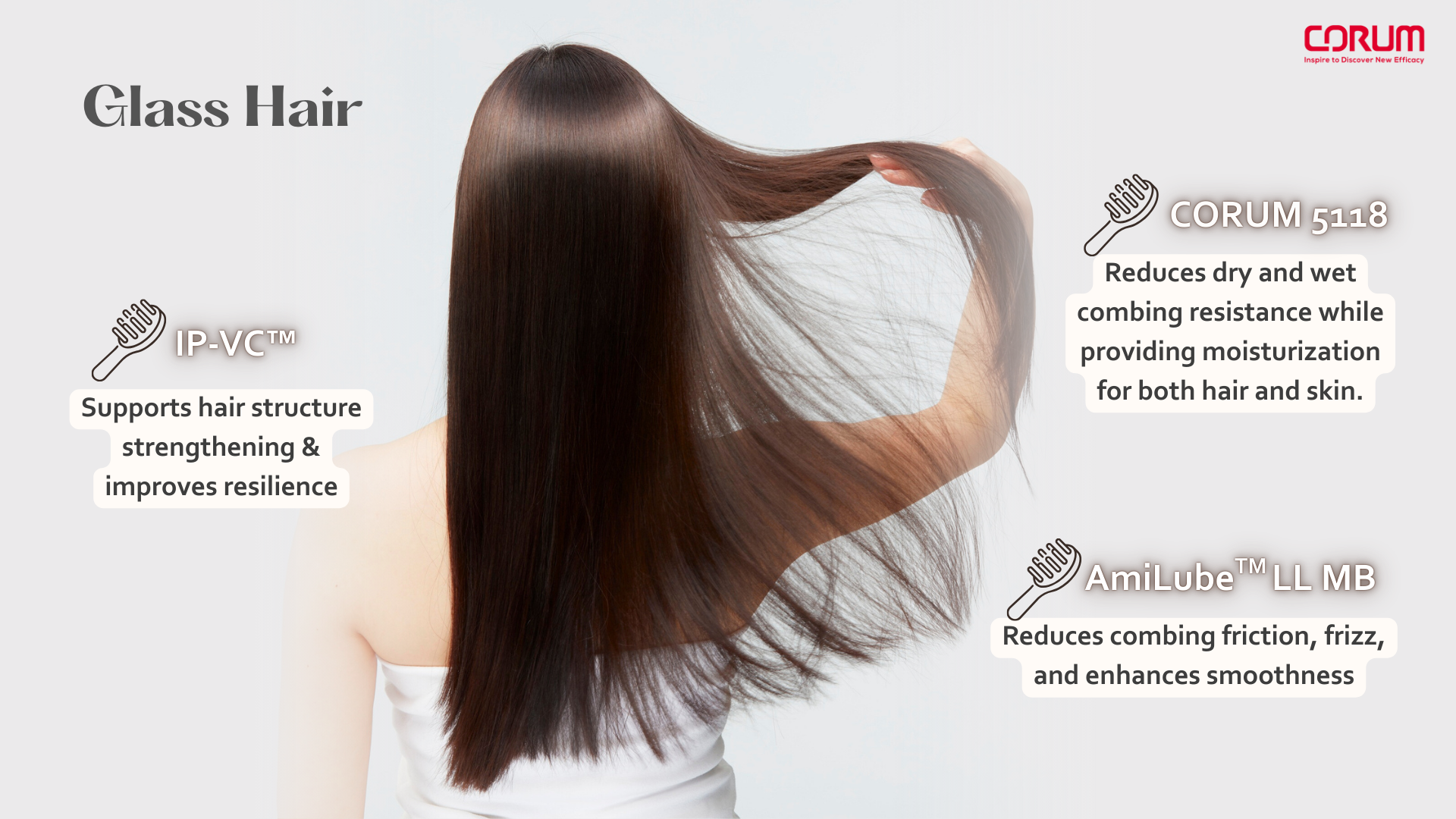
In response to this trend, functional ingredients that support scalp health, hair structure stability, and daily-use sensory performance have become essential in modern hair care formulation design. IP-VC™/ IP-VC™MB helps improve hair tensile strength, contributing to improved hair resilience and overall condition. AmiLube™ LL MB can be used in formulation design to reduce combing friction, minimize frizz, and enhance smoothness, making it especially suitable for daily-use and leave-in hair care products. In addition, CORUM 5118 provides lipid-like emollient support aligned with skin and scalp sensory expectations, helping improve comfort while reducing post-cleansing dryness or tightness.
Follow us to stay updated on the latest Beauty trends and formulation insights.
 Language